
Energy Efficient Windows Tampa: Lower Your Electric Bill by Up to 30%
April 28, 2026
On this page
Why Tampa Homes Lose So Much Energy Through Windows
If your Tampa electric bill spikes every summer and you’re running the A/C around the clock just to stay comfortable your windows may be the biggest culprit. Here’s exactly what energy efficient windows in Tampa do, what the numbers look like for Tampa homeowners, and how to calculate your real ROI before spending a dollar.
If you’ve lived in Tampa for more than one summer, you already know the routine. The air conditioner kicks on in May and barely stops until October. The electric bill climbs. You turn the thermostat up a degree or two, close the blinds, and wonder if there’s a better solution.
There is and it’s not a smarter thermostat or a new HVAC unit. For many Tampa homeowners, the fastest path to meaningfully lower energy costs runs directly through the windows.
Standard windows especially those installed more than 15 years ago are surprisingly poor insulators. In Tampa’s intense solar climate, upgrading to energy efficient windows in Tampa can reduce your cooling costs by 20% to 30%, according to the U.S. Department of Energy. For a home paying $200 per month in summer electricity bills, that’s real money every single month for years to come.
25–30%
of a home’s heating and cooling energy loss occurs through its windows making them one of the highest-impact upgrade targets in any Florida home.
Why Tampa Homes Lose So Much Energy Through Windows
Tampa sits squarely in one of the most solar-intense regions in the continental United States. Average summer temperatures range from 88°F to 92°F, with humidity making it feel several degrees hotter. Your HVAC doesn’t just have to cool the air it has to fight the radiant heat pouring through every pane of glass in your home.
Tampa Electric (TECO), which serves most of the Tampa Bay area, reports average residential electric bills of $130–$170 per month. During June through September, many homeowners report bills pushing $200–$280. While multiple factors contribute to those numbers, the thermal performance of your windows plays a measurable role that most homeowners underestimate.
Single-pane windows still common in homes built before the 1990s offer almost no thermal resistance. Even older double-pane windows without modern coatings allow substantial solar heat gain. The result is a home that works against your air conditioner rather than with it.
What Makes a Window Energy Efficient? The Technology Explained
Before & After: Real Energy Bill Impact for Tampa Homes
Abstract technology specs are useful, but what Tampa homeowners actually want to know is: what does this look like on my electric bill? Here are two illustrative before/after scenarios based on typical Tampa home profiles and DOE-aligned savings estimates.
Example 1: 1,800 Sq. Ft. Home in South Tampa
Existing windows: single-pane, original to the home (15+ years old). Upgrading to ENERGY STAR double-pane with soft-coat Low-E and argon fill.
Scenario | Monthly Bill (Summer Avg.) | Annual Electric Cost |
|---|---|---|
Before (single-pane, no coating) | $218 | $2,016 |
After (ENERGY STAR, Low-E, argon) | $154 | $1,416 |
Annual Savings | $64/month | $600/year |
Example 2: 2,400 Sq. Ft. Home in New Tampa / Wesley Chapel
Existing windows: older double-pane without Low-E coating. Upgrading to high-performance Low-E argon windows with ENERGY STAR certification.
Scenario | Monthly Bill (Summer Avg.) | Annual Electric Cost |
|---|---|---|
Before (double-pane, no Low-E) | $267 | $2,580 |
After (Low-E, argon, ENERGY STAR) | $192 | $1,836 |
Annual Savings | $75/month | $744/year |
These projections align with the Department of Energy’s documented savings range of $125–$465 annually for homeowners replacing single-pane windows with ENERGY STAR-certified products in hot Southern climates. Over a 10-year window lifespan, that’s $2,000–$5,000 in cumulative energy savings.
Florida Rebates and Tax Incentives That Reduce Your Upfront Cost
One of the most overlooked aspects of window upgrades is how much the net cost can be reduced through available incentives. Between federal tax credits and utility programs, the out-of-pocket expense is often significantly lower than the sticker price suggests.
Federal Tax Credit (30% Under the IRA)
The Inflation Reduction Act extended and expanded the Energy Efficient Home Improvement Credit (Section 25C). As of 2025, homeowners can claim a 30% federal tax credit up to $600 per year for qualifying ENERGY STAR-certified window installations in a primary residence. This is a direct tax credit, not a deduction, meaning it reduces your actual tax bill dollar-for-dollar.
On a $5,000 window project, that’s a $1,500 credit back at tax time. The credit renews annually, so phased installations across multiple tax years each qualify independently.
TECO and Duke Energy Utility Rebates
Tampa Electric and Duke Energy Florida have offered rebate programs for energy-efficient home improvements, including windows. Availability changes periodically check FloridaGreenEnergyWorks.com or contact TECO directly to confirm current offerings before scheduling your installation.
Florida Property Tax Exemption
Florida’s Property Tax Exemption for Renewable Energy and Energy-Efficient Improvements allows qualifying upgrades to be excluded from your home’s assessed value. Your home’s market value increases, but your assessed value for tax purposes doesn’t a meaningful secondary benefit in Tampa’s rising real estate market.
The Financial ROI: Running the Real Numbers
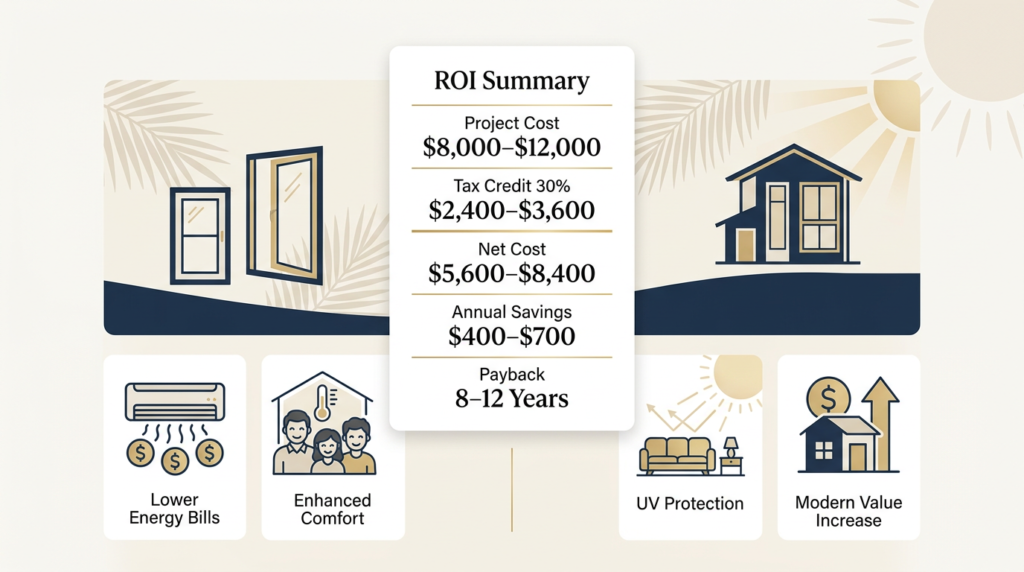
For a typical Tampa home replacing 10 windows with high-performance ENERGY STAR units:
Cost / Savings Component | Amount |
|---|---|
Estimated project cost (10 windows) | $8,000 – $12,000 |
Federal tax credit (30%) | – $2,400 – $3,600 |
Net out-of-pocket cost | $5,600 – $8,400 |
Annual energy savings | $400 – $700 |
Energy-based payback period | 8–12 years |
But the energy savings are only part of the picture. Consider what else you’re gaining:
- Increased resale value — window replacements recoup approximately 68–72% of project cost in Southern markets (Remodeling Magazine 2024)
- Reduced HVAC wear — a system that cycles less frequently lasts longer and requires less maintenance
- Improved comfort — fewer hot spots near windows, reduced glare, lower humidity infiltration
- Noise reduction — dual-pane windows significantly reduce traffic and neighborhood noise
- UV protection — Low-E coatings block up to 99% of UV rays, protecting flooring, furniture, and fabrics
- Potential homeowners insurance discount impact-rated energy saving doors and windows may qualify for premium reductions
When you factor in these secondary benefits, particularly resale value, the true ROI timeline is meaningfully shorter than the energy-only calculation suggests.
What to Look for When Choosing Energy Efficient Windows in Tampa
Not all energy efficient windows in Tampa perform equally in Florida’s specific climate. When selecting Tampa energy efficient windows, here’s a practical checklist to use when evaluating your options.
Certifications
- ENERGY STAR certified for the Southern Climate Zone specifically
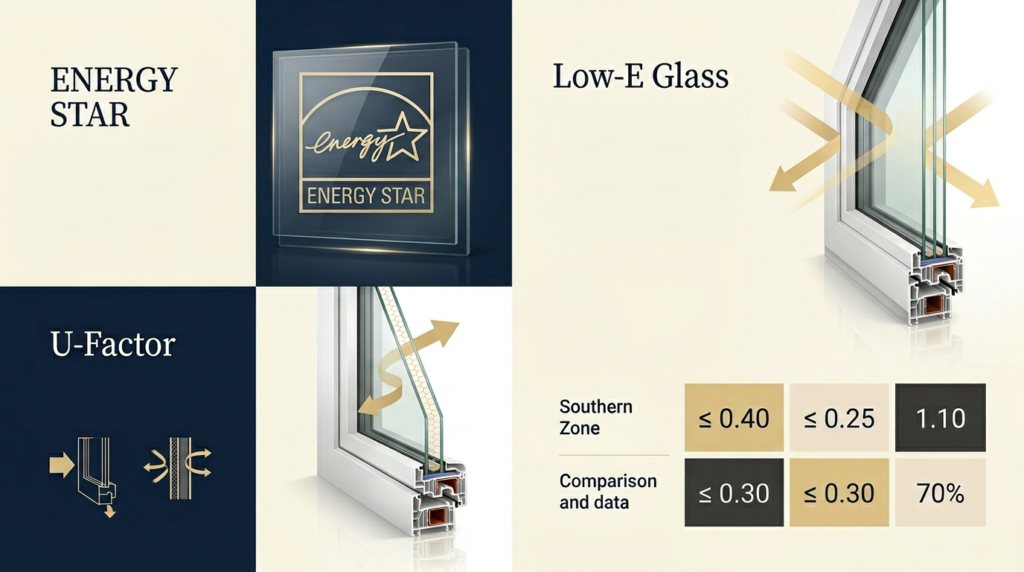
- NFRC label showing U-Factor ≤ 0.30 and SHGC ≤ 0.25
Glass Performance
- Soft-coat Low-E coating
- Argon or krypton gas fill between panes
- Warm-edge spacer technology
Frame & Build
- Vinyl or fiberglass frames
- Foam-filled frames for additional insulation
- Impact-resistance rating if in hurricane zone
Installation
- Proper flashing and weathersealing around the frame
- Installer familiar with Florida building codes.
- Written warranty on both product and installation labor
Should You Replace All Windows at Once or Phase the Project?
There’s no single right answer, but the priority logic is clear. If budget is a constraint, here’s how to sequence the upgrade for maximum impact:
South and west-facing windows first. These receive direct afternoon sun during Tampa’s hottest part of the day and account for the majority of solar heat gain in most homes.
Target your largest windows next. Bay windows and large picture windows lose the most energy proportionally. Square footage matters more than window count when calculating energy impact.
Address any visibly failing windows immediately. Fogged or cloudy glass between panes indicates a broken seal the gas fill has escaped and the Low-E coating is no longer performing.
One practical benefit of phasing your energy efficient windows Tampa project: the federal tax credit renews annually. You can capture the 30% credit in Year 1 for south/west windows, then again in Year 2 for remaining windows effectively splitting the tax benefit across two returns.
Frequently Asked Questions
Do energy efficient windows really make a noticeable difference in Tampa’s heat?
Energy efficient windows in Tampa work harder and longer than in a Northern state because of Tampa’s solar intensity and extended cooling season. The investment pays back faster precisely because Tampa’s climate stress is so high.
How long do quality energy efficient windows in Tampa last?
Quality Tampa energy efficient windows vinyl or fiberglass double-pane typically last 20–25 years with minimal maintenance. The Low-E coating is factory-sealed inside the unit and doesn’t degrade from cleaning or normal exposure.
Do I need impact-resistant windows in Tampa?
Hillsborough County doesn’t require impact glass by code unless you’re in a designated high-velocity hurricane zone. That said, impact-rated windows that are also ENERGY STAR certified offer both hurricane protection and energy savings and may qualify for homeowners insurance discounts worth factoring into your decision.
Can I upgrade both windows and doors for energy savings in Tampa?
Absolutely. Investing in energy saving doors and windows together delivers the greatest thermal improvement especially if your entry or sliding glass doors are as old as your windows. Many Tampa homeowners find that upgrading both in a single project simplifies permitting, reduces labor costs, and maximizes the federal 25C tax credit.
What’s the difference between regular double-pane and energy efficient windows in Tampa?
A standard double-pane window without Low-E coating still allows significant solar heat gain. With energy efficient windows in Tampa, the coating and gas fill not the number of panes are what deliver meaningful performance improvement. Many homeowners still see 20–25% savings upgrading from older double-pane windows that lacked modern coating technology.
Can I claim the federal tax credit if I phase the installation?
Yes. The Energy Efficient Home Improvement Credit (25C) applies per tax year. If you install windows across two calendar years, you can claim up to $600 in each year for qualifying installations effectively doubling your available credit for larger projects.
The Bottom Line
Energy efficient windows in Tampa aren’t a luxury upgrade they’re a financially sound investment with documented return, federal tax incentives, and verifiable impact on your monthly utility costs. The combination of Tampa’s aggressive solar climate, rising TECO rates, and available rebates creates one of the stronger cases for window replacement you’ll find anywhere in the country.
If your windows are more than 15 years old, lack Low-E coating, or show any signs of seal failure, the economics of upgrading are well in your favor.The longer you wait, the more you spend on electricity bills that a better window would have already saved.